






One Year and Nine Months Ago
Written by Carrie Petersen, a member of the medical team working in Haiti:
We arrived safely in Haiti today. After traveling for more than 20 hours, we ate a hearty meal and are now resting for tomorrow.
On the drive to our final destination today, we took a right turn onto a road that I’d never noticed before. We drove about 200 yards uphill to a spot where the ground leveled off. The ground was covered with small rocks, and green bushes were taking over the land. It was a memorial for the victims of the earthquake that struck Haiti on January 12, 2010. On that spot, under those rocks, thousands of earthquake victims had been buried – buried in one mass grave and without any markers. At the time it had been a burial of necessity.
Sometime after the earthquake and the burial, a memorial appeared on the site. There are no road signs or large statutes or even a permanent marker. But the visitor who turns down the unsuspecting road will see hundreds of black wooden crosses about two feet tall placed among the rocks. Some of the crosses are standing but most have fallen down – I suppose they have been knocked down by wind and rain and time. Among the crosses are wreathes and higher up on the hill stands a large cross draped with purple cloth.

I don’t know who is responsible for the memorial. I only know that it was a privilege to visit there today. To remember all of the lives that were lost one year and nine months ago today.
Before loading into the vehicles to continue our journey, we stopped to say a prayer. To summarize our prayer, which was all that needed to be said: God be with the survivors.

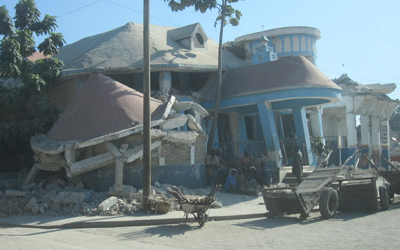
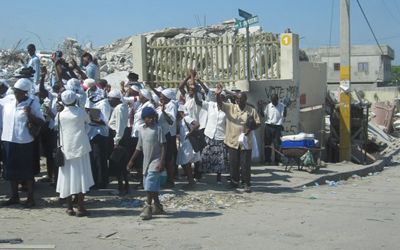
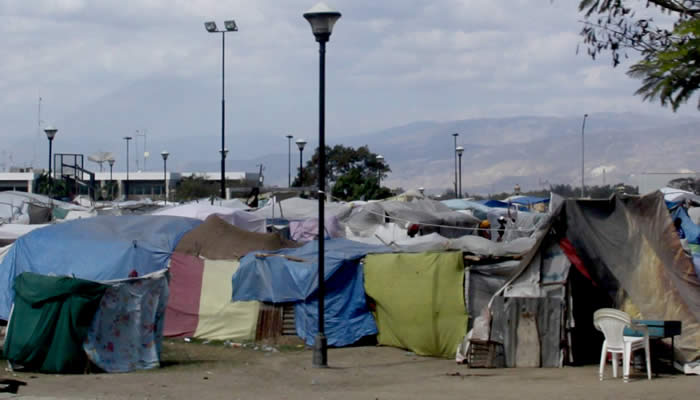
Postscript: Almost two years later, the effects of the earthquake are still visible here in Haiti. Today it was seen in a man with one leg standing on the side of the road in Port-au-Prince, a crumpled building that has yet to be rebuilt, and the thousands of makeshift shelters that have become homes to the homeless.
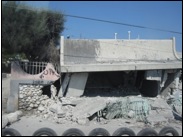 As we drove along the outskirts of Port-au-Prince I didn’t see widespread areas of collapsed buildings. What I did notice was the usual hustle and bustle of life on the streets but with a changed backdrop of broken homes and buildings. Homes that appeared intact have tents or tarps outside where people are living – people are afraid to sleep in their homes or spend any time inside buildings. We passed several vacant lots full of tents or tarps and outside the city we saw a hillside filled with shelters built of blue tarps and plastic hung on stick frames. As the rainy season approaches these temporary shelters are inadequate and present health issues…
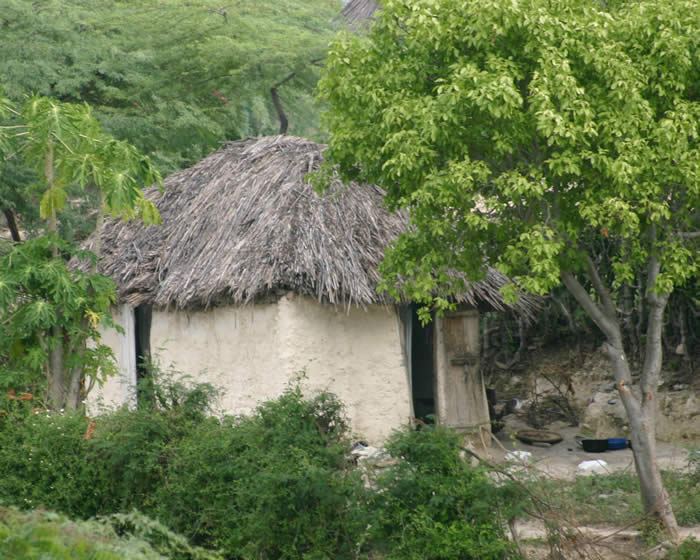
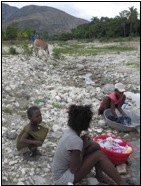 We arrived in Terre Blanche after dark and were warmly welcomed with singing and a prayer of thanksgiving by some of our Haitian co-workers. Our medical team had been scheduled for over a year and we worked alongside the Haitian clinic staff to meet the needs of people coming through the clinic. The earthquake was heard and felt throughout the country of Haiti but in our area there was no loss of life and the buildings are intact although some have cracks now. Like in PAP, people live with fear about future earthquakes. This area has not had a harvest for two years due to the devastating hurricanes of 2008 and then droughts that dried up later crops. The riverbed has only a trickle of water, barely enough to wash clothes. Many households have doubled in size as displaced people have moved out of the earthquake-affected areas. In a community that is already feeling the lack of food and water, more people have caused additional strain. Because of the generosity of churches and individuals, we were able to give beans and rice to every patient coming through the clinic – that was over 1,100 people.
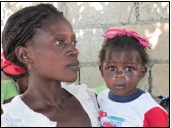 Clinic of Hope stories: Healthy newborn baby boy; severe leg injury from a motorcycle accident; advanced cancer diagnosis given to several different patients; beans and rice given to every patient; waking in the morning to hymns of praise being sung by those in the clinic waiting area; young woman suffering depression after her five year old son and 21-year-old sister died in the earthquake; people receiving prayer as well as medicine; smiles of children as they receive lollipops at the doctor tables; happiness that we were able to see every waiting patient each day; patients spending the night in the observation room; minor surgeries done; malnourished children receiving high nutrition peanut butter supplement on the Medika Mamba program; and the list goes on.
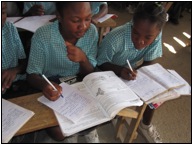 Terre Blanche School: There are 850 students registered at the Terre Blanche school in grades pre-K through 9th grade. It was wonderful to see how much these students value their education and love and respect their teachers. Students receive a meal each day, a generous serving of rice and beans with a sauce. There were four educators on our team and we were able to spend time in the primary and secondary classrooms. We met each of the teachers, talked with students and then had the joy of going into the 9th grade English class to have English conversations with small groups of students. Students start learning French in pre-K with English and Spanish added in the secondary school.
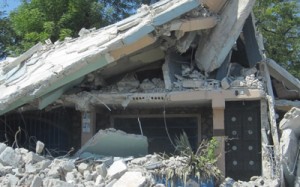 The situation all around Haiti is so incredible that it’s hard to express in words. The sheer enormity of the destruction can hardly be conveyed adequately by words or pictures, and the emotional trauma is even more hidden. There are fallen buildings for miles, thousands of people living in the open, and many Haitians just struggling to keep their families alive. I was privileged to contribute a tiny fraction to the work many are doing to help relieve and reconstruct.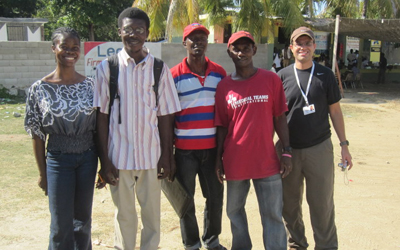

 Instagram Feed